Statement from the President

When we started the New River Gorge Historical Society, one of the reasons was pretty simple: there is a lot of history in this region that is disappearing, and once we lose it, we aren’t getting it back.
That is why we want to make our position clear.
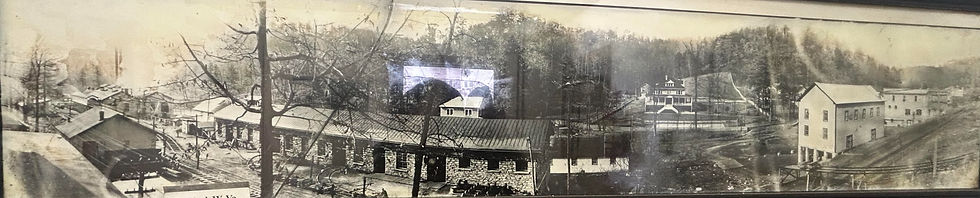
The New River Gorge Historical Society opposes the demolition of the historic structures in Thurmond and the unnecessary loss of historic structures throughout the New River Gorge region.
Our concern doesn’t stop at the boundaries of the National Park.
Prince, Thurmond, Glen Jean, Whipple, Minden, Hinton, Mount Hope, Fayetteville, Ansted, Gauley Bridge, Montgomery and countless other communities helped make this region what it is. Some are inside the park. Some aren’t. That distinction doesn’t make their history any less important.
We also understand the reality of what we are talking about.
Some of these buildings are in bad shape. Preservation costs money. Not every structure is going to have an easy answer, and we aren’t pretending otherwise.
What we don’t believe is that demolition should be the answer before we have seriously explored what can be stabilized, rehabilitated and put back into use.
Attorney Steve New is representing the New River Gorge Historical Society in our efforts surrounding the threatened historic structures. While that work moves forward, we are also working on the larger question that I believe preservationists have to answer:
If we save these places, what comes next?
That question is what led me to begin developing the New River Gorge Artisan & Heritage Corridor.
I don’t want us to fight to save buildings just so they can sit empty for another 20 years. I want to find ways to use them again.
I want preservation to support local artists and artisans. I want young people to learn the trades necessary to restore historic buildings. I want visitors to experience the communities and history surrounding the New River Gorge, not just drive through them on the way to another destination. I want more of the economic value created by tourism to stay in the communities that have been here for generations.
That is the larger idea behind the Corridor.
The plan would connect communities throughout the region through historic preservation, Appalachian art and traditional craft, education, outdoor recreation, small business and tourism while allowing each community to keep its own identity.
We already have a place to begin.
One of the Historical Society’s biggest goals is eventually rehabilitating the historic Prince/Berry Store and opening it as a museum and research center. I want that museum to preserve more than the history of one building. It can become a place for photographs, documents, oral histories, artifacts and stories from communities throughout the Gorge.
From Prince, McKendree Road gives us a natural historical and recreational connection toward Thurmond. Over time, I would like to see tours, interpretation, biking and scenic driving become part of that experience.
Then we reach Thurmond.
I don’t want future generations walking through Thurmond looking at signs and photographs explaining what used to stand there.
I want us to save what we can reasonably save and put those buildings back to work.
One part of the Corridor proposal would create spaces where Appalachian artists and artisans can make and sell their work, where visitors can watch and learn, and eventually where artists could stay and work through a residency program.
That means a historic building is being used. An artist is being supported. A visitor is learning something. Money is being spent locally. And Thurmond remains a living place instead of becoming a memory of one.
Glen Jean could become another piece of that system.
If we are serious about preserving historic structures throughout southern West Virginia, we need people who know historic masonry, carpentry, plaster, windows, metalwork and other preservation trades. I want to explore partnerships with colleges, technical programs, preservation organizations, tradespeople and apprenticeship programs to teach those skills and use projects throughout the Gorge as opportunities to put them into practice.
That is where the pieces start feeding each other.
Someone learns a preservation trade and helps restore a historic building.
An artisan makes something here and has somewhere here to sell it.
A visitor who came to raft, hike or climb spends another day exploring Prince, Thurmond, Hinton or another surrounding community.
A vacant building becomes useful again.
A young person develops a skill that can become a career.
A community keeps another piece of its history and gains another piece of its economy.
Then we keep building.
Hinton has its downtown, railroad history and riverfront. Mount Hope has its own history and community culture. Fayetteville already has a strong outdoor recreation and small-business economy. Ansted and Gauley Bridge have their own stories and opportunities. Montgomery can help connect the Gorge with the Upper Kanawha Valley.
The goal isn’t to make these places the same.
It is to connect them without taking away what makes each one different.
Millions of people are discovering the New River Gorge because of its natural beauty and outdoor recreation. We have an opportunity to introduce those same people to the communities and people who made their lives here long before this became a national park.
And I think we should ask more than how many people visit.
Are locally owned businesses growing because they came? Are artists and craftspeople getting paid? Are local contractors getting work? Are historic buildings being used again? Are young people learning skills they can build a life around? Are visitors staying another night and spending another day in our communities?
That is how I want to think about the future of the New River Gorge.
Preserve what matters.
Put it back to work.
Teach people the skills to continue it.
Connect visitors with the communities around the Gorge.
Create opportunities for local people to build something here.
Then use that success to help preserve the next building and strengthen the next community.
The New River Gorge Historical Society has a specific role in that larger vision. We can preserve and document our history, advocate for threatened historic resources, work toward the museum in Prince, develop tours and educational programs and help demonstrate that preservation can be part of this region’s future.
The larger Corridor will take much more than one organization. It will require communities, municipalities, businesses, colleges and universities, artists, preservation groups, tourism organizations, nonprofits, the National Park Service and, most importantly, the people who actually live here.
I have spent the last several months developing this idea into a larger framework, including community roles, potential projects, funding approaches and a phased plan for where we can begin.
Not every detail is settled, and it shouldn’t be. Something involving this many communities should be shaped by the people who live in them.
But the larger idea is ready to move beyond my desk.
I believe we can preserve the history of the New River Gorge without freezing it in time. We can save historic places and give them a purpose again. We can connect preservation with education, recreation, art and economic development without turning our communities into a manufactured version of Appalachia for visitors.
We can build something that still belongs to the people who live here.
That is what I want the New River Gorge Artisan & Heritage Corridor to become, and the New River Gorge Historical Society gives us a place to start.
Prince, Thurmond and Glen Jean give us our first opportunity.
From there, we build.
If you believe this history is worth saving and this vision is worth pursuing, I hope you’ll join us. Memberships, donations and community involvement will help the New River Gorge Historical Society continue advocating for threatened structures, work toward the Prince Store museum, develop educational programs and tours, document our communities and begin turning this larger vision into something real.
We have a lot of work ahead of us.
I’d rather do the work than someday explain why we watched these places disappear.
Jennings Berry, Ph.D.
President
New River Gorge Historical Society
Comments