The Rise and Decline of Layland West Virginia: A Journey Through Coal History and Community Resilience

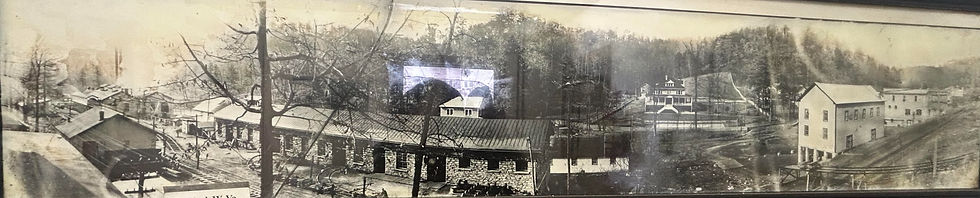
The story of Layland, West Virginia, reflects the broader history of coal mining in Appalachia. Originally known as Gentry, this community was shaped by the New River and Pocahontas Coal Company and later by other mining firms. Layland’s unique development, with larger homes and durable company buildings, stands out among coal camps. Over time, automation and the depletion of coal along the Laurel Creek line led to the decline of most companies here, leaving only one operation with a small presence today. The community’s diverse heritage is preserved through oral histories, offering a window into the lives of those who lived and worked in this rugged landscape.
Early Development by the New River and Pocahontas Coal Company
Layland’s origins trace back to the early 20th century when the New River and Pocahontas Coal Company established mining operations in the area. The company developed the town initially under the name Gentry, building infrastructure to support its workforce. Unlike many coal camps, the homes in Gentry were notably larger, designed to accommodate families with more space and comfort. This approach reflected a commitment to creating a stable community rather than just a temporary labor camp.
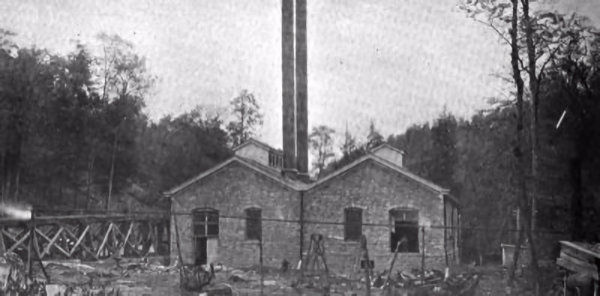
The company also invested in solid, long-lasting buildings. One of the most enduring structures is the old power house, which still stands as a symbol of the town’s industrial past. Its robust construction has allowed it to survive decades of change, serving as a physical reminder of the era when coal mining was the lifeblood of Layland.
Larger Homes and Durable Company Buildings
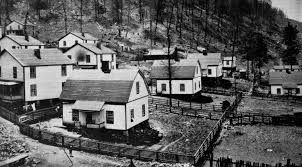
The decision to build larger homes in Layland set it apart from many other coal camps in Appalachia. While typical coal camp houses were small (3-4 rooms) and utilitarian, Layland’s residences offered more room, reflecting a different vision for worker housing. This design choice helped foster a stronger sense of community and family life.
Company buildings were constructed with longevity in mind. The powerhouse, for example, was built with durable hand-cut stone and craftsmanship that has allowed it to remain intact long after many other structures have disappeared.
Layland Mine Disaster
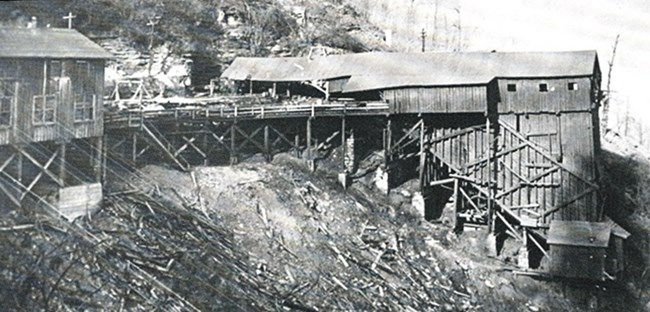
The Layland Mine Disaster, which occurred on March 2, 1915, is one of the most tragic (4th-deadliest) events in the history of West Virginia's coal mining industry. This catastrophic incident took place at the New River & Pocahontas #3 mine, where an explosion claimed the lives of 112 men, mostly miners but also a railroad porter and his dog. The disaster was attributed to a buildup of methane gas that ignited, causing a massive explosion in the mine, despite reports that the mine was the cleanest in the county.
Once the explosion shook the ground, 112 men had died, and 47 were still alive within the mine. They barricaded themselves in and built a wall to protect themselves from the after-damp. These men survived for 4 days, living off the bark of the mining timbers and the dirt surrounding them. After 4 days, the first group of men escaped from the 9th left passage and made it to the mine entrance. They carried a note indicating that 41 more men were inside and alive. Finally, the rescue teams reached the 41 men in the 10 portal on the left. There is even a letter that one of the men wrote, which can be read at the West Virginia Regional History Center.
The aftermath of the disaster led to significant changes in mining safety regulations and practices. In the wake of the tragedy, investigations revealed the need for improved ventilation systems and stricter enforcement of safety protocols to protect miners from similar hazards in the future. The Layland Mine Disaster not only highlighted the dangers of coal mining but also galvanized community efforts to advocate for better working conditions.
Today, the memorial dedicated to the victims of the Layland Mine Disaster serves as a poignant reminder of the risks faced by miners and the sacrifices made by those who worked in the coal industry. It stands as a tribute to the community's resilience and the enduring legacy of those who lost their lives in pursuit of their livelihoods.
The Impact of Automation and Coal Depletion
By the mid-20th century, technological changes began to reshape coal mining in Layland. Automation reduced the need for large workforces, and mining operations became more efficient but less labor-intensive. At the same time, the coal seams along the Laurel Creek line started to run out, limiting the available resources.
These factors combined to cause the decline of the coal industry in Layland. Mines closed, jobs disappeared, and many residents moved away in search of new opportunities. Today, only one company remains active in the area (a mine supply company), operating with just two employees housed in the old powerhouse. This small presence underscores the dramatic shift from a bustling mining town to a quiet community with deep historical roots.
A Diverse Community Preserved Through Oral History
Layland’s population was diverse, with workers coming from various backgrounds and cultures. This diversity is captured in the oral histories collected by the New River Gorge National Park. These stories reveal the daily lives, struggles, and celebrations of the people who called Layland home. Layland was home to members of different nationalities, including Russian, Italian, and Polish, and it also had a healthy black population that shared a consolidated school with the black children of Lawton.
The oral histories highlight the community’s resilience and adaptability. They provide personal insights into how families coped with the challenges of mining life, maintained cultural traditions, and supported one another through economic ups and downs. These narratives enrich the historical record and offer visitors a deeper understanding of Layland’s unique character.
Preserving Layland’s Legacy
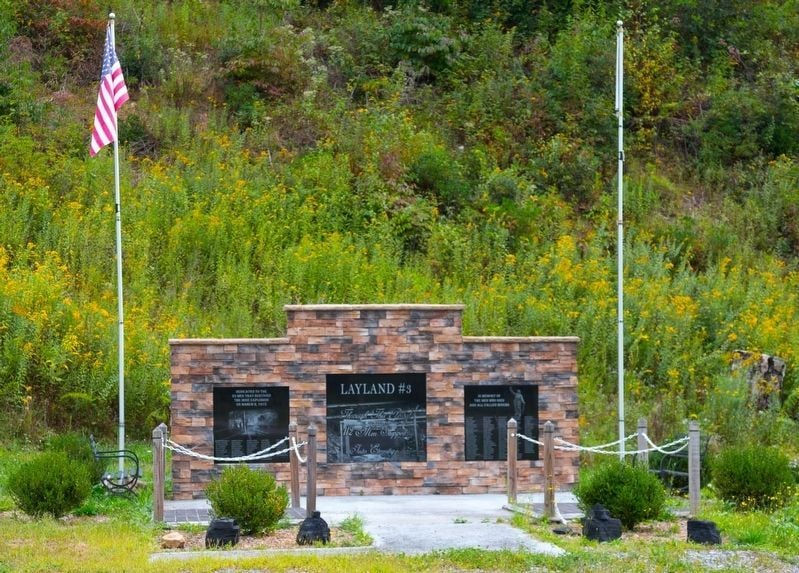
Today, Layland stands as a testament to the coal-mining heritage of West Virginia, but also survives as an unincorporated residential community. The larger homes of the camp are gone. Still, the sturdy company buildings and the memorial to the Layland disaster remind visitors of a time when the town was a thriving center of industry and community life. The survival of the old power house and the continued operation of a small coal company office connect the past to the present.
For history enthusiasts and tourists, Layland offers a chance to explore a lesser-known chapter of Appalachian coal history. The oral histories available through the New River Gorge National Park website provide valuable context and personal stories that bring the town’s history to life.
Visitors interested in industrial heritage, community development, and Appalachian culture will find Layland a compelling destination. Exploring the town and its surroundings offers a meaningful experience that honors the people who built and sustained this community through decades of change.

Comments